Sunday, October 16, 2022

Saturday, October 15, 2022
Noun Clauses: Embedded Questions
Noun clauses: Embedded questions
Sub-topics: Ask about an article
A question can be include in a noun clause. At the beginning of a noun clause, some expresions are used as an introducction to the embedded question:
- Tell me...
- I'd like to know...
- Could you tell me...?
- I can't remember...
- I don't understand...
- I wonder...
- I'm not sure...
- I don't know...
- Do you know...?
There are two ways of questions that can be embedded:
- Yes/No questions ➡ Embedded Yes/No questions
Structure: Expression + IF + Subject + (Auxiliary) + Verb + complement
Examples:
- Is that magazine interesting ➡ Tell me IF that magazine is interesting.
- Did he like the article? ➡ I'd like to know IF he liked the article.
- Have you finished that newspaper? ➡ Could you tell me IF you've finished that newspaper?
2. Information questions ➡ Embedded information questions
Structure: Expression + Wh question + Subject + (Auxiliary) + Verb + Complement
Examples:
- What's the article about? ➡ I can't remember WHAT the article's about.
- Why have you decided to read it? ➡ I don't understand WHY you've decided to read it.
- Who's the writer? ➡ I wonder WHO the writer is.
- Whose magazine is it? ➡ I'm not sure WHOSE magazine it is.
- When was it written? ➡ I don't know WHEN it was written.
- Where is the writer from? ➡ Do you know WHERE the writer is from?


MGMS 🌈🌸🌸🌸
Sunday, October 9, 2022
Practice Exercise #6
Topics: Reading for pleasure, Noun clauses.
Sub-topics: Recommend a book, Ways to describe a book.
For this section I will make a review of the topics learned through on a exercise using all the structures, vocabulary and more to show my improvement at these topics.
Saturday, October 8, 2022
Noun Clauses
Noun Clauses
We use "NOUN CLAUSES" for giving information about something. A noun clause is introduced by the word "THAT", a noun cluse it's a sentence inside another sentence.

Structure:
Subject + Verb + Complement + THAT + Subject + Verb + Complement.
Noun clauses often follow these verbs and adjecives:
Agree Hear Disappointed
Think See Happy
Believe Understand Sad
Feel Hope Sorry
Suppose Forget Sure
Doubt Remember Surprised
Guess Know
Examples:
- I didn't know THAT he wrote this book.
- I think THAT Junot Diaz's novels are fantastic.
- Did you forget THAT her biography was 500 pages long?
Examples:
- I didn't know he wrote this book.
- I think Junot Diaz's novels are fantastic.
- Did you forget her biography was 500 pages long?
Examples:
A: Does Stephen King have a new book out?
B: I THINK SO/ I BELIEVE SO/ I GUESS SO/ I HOPE SO.
(SO = I THINK Stephen King have a new book out)
Note: "SO" is only used for affirmative in all the verbs, but in negative we use:
I DON'T THINK SO/ I DON'T BELIEVE SO/ I GUESS NOT/ I HOPE NOT.
(I don't guess so/ I don't hope so)
Finally, a noun clause can also be an adjective complement.
Examples:
- It's interesting (THAT) she wrote a new book.
- I'm surprised (THAT) he hasn't written a new novel yet.
At speaking, the stress in the sentence is pronunced in the verb.
There's a lot of words that can be used as a NOUN CLAUSE:
.png)
MGMS 🌈🌸🌸🌸
Friday, October 7, 2022
Recommend a book and ways to describe a book
Recommend a book
Sub-topic: Genres of books.
When we enjoy something, we share our passions with friends or family and we can have a dicuss about it. Reading is the perfect example of these situations.
Example:

Yui: Oh, hey Reiji, I didn't know you are here at the manor library. What are you searching for?
Reiji: Oh, dear Yui. I'm not here for something special, just my daily dracula biography reading. You know I just can't put it down.
Yui: Oh yeah, I know, it's a real page turner.
Reiji: How about you? It's a surprise to see you here.
Yui: Oh don't mind me, I'm juuust ehm I'll just browse something interesting here. You know, it's a big library so I'm just keep going hehe. See you later.
Reiji: Wait! I know you're on something, I know you very well... Confess.
Yui: Waaaa, I'm sorry, I didn't want to hide something for you but you caught me. I just can't seem to get into the thriller books you said the other day, they just aren't my thing, so I came to give them back at their bookshelves. And I had shame to tell you, I know you enjoy reading and you can't get enough of books. Sniff*
Reiji: Oh Yui, you don't need to cry, it's fine dear. Here, what about search for something you like and we read it together? Sorry if I didn't ask you before.
Yui: Don't worry, I understand, I'm better now, thanks. Spending time with you always makes me happy.
Reiji: I'm glad, so what would you like to read?
Yui: Hmmmm let's see... What about... romance books?
Reiji: (Oh no, those put me to sleep, they're my only weakness in my passion for reading, but I'll do it for her)
Yui: Reiji?
Reiji: Oh hahaha well if it's what your heart desires, I will gladly do it.
Yui: u/////w/////u

Genres of books
Genres of books

The books we read contain a lot of topics, information and more for all people's tastes, that's why we have them separated by genres. Let's see some of them.
- Fiction
Novels (Novelas)

Mysteries (Misterio)

Thrillers (Suspenso)

Romance (Romance)

Science-fiction (Ciencia ficción)

Short-stories (Historias cortas)

- Non-fiction
Biographies (Biografías)

Autobiographies (Autobiografías)

Travel (Viaje)

Memoirs (Memorias)
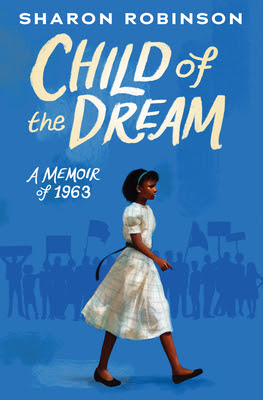
Self-help (Superación personal / Autoayuda)

MGMS 🌈🌸🌸🌸
Saturday, October 1, 2022
Practice Exercise #5
Topics: The Passive Causative, Services.
Sub-topics: The Causative, Passive voice.
For this section I will make a review of the topics learned through on a exercise using all the structures, vocabulary and more to show my improvement at these topics.
Subscribe to:
Posts (Atom)
Usagi HATES english...


